Basement Mold Removal in Brookhaven, GA
Below-grade walls live in damp soil. We remediate the mold and fix the water path, inside and out.
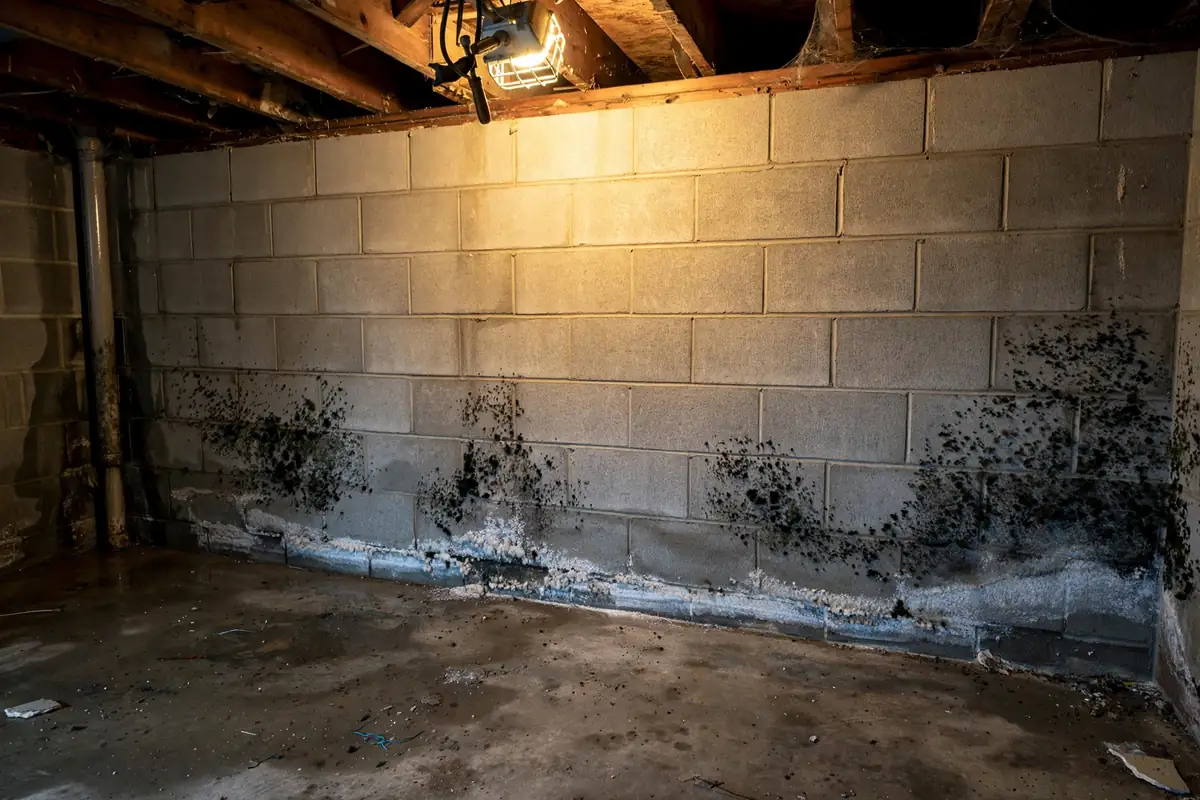
A basement is a concrete box sitting in wet earth. In Brookhaven that earth is red clay, which drains slowly and holds rainwater against foundation walls for days. Water pushes through as hydrostatic pressure, seeps through cracks, or simply wicks through porous concrete. Finished walls hide it all until the musty smell arrives or the baseboards stain.
The other half of the problem is air. Cool basement air holds less moisture, so humid summer air entering through windows, doors, or the HVAC system condenses on the coolest surfaces. That is why basement mold often appears on the north wall or behind stored furniture first.
Our work runs in layers. Contaminated drywall is cut back to verified dry lines, framing is HEPA-cleaned and treated, and the space is dried with commercial dehumidification. Then we address the water path: grading, downspouts, gutters, sump needs, and interior humidity control. A basement that is only cleaned, without the water plan, is a repeat customer.
Signs You Need This Service
- Musty odor that worsens after rain
- Water stains or discoloration on walls, especially near the floor
- White powdery deposits (efflorescence) on concrete or block walls
- Peeling paint or bubbling on basement walls
- Damp carpet, warped baseboards, or rust on metal storage
Our Process
Map water entry
Meters and inspection trace whether moisture comes through walls, the floor, plumbing, or humid air.
Contain and remove
Affected drywall cut to dry lines and bagged; the zone sealed under negative air pressure.
Clean and dry
Framing HEPA-cleaned and treated; commercial dehumidifiers bring the space to verified dry readings.
Plan for dry
Written plan covering grading, downspouts, sump needs, and humidity control targets.
What Affects the Cost
Cost follows how much finished material must be removed and what the water fix requires. Cutting two feet of drywall along one wall is a different job than a fully finished basement with wall-to-wall growth.
Exterior work like regrading or downspout extensions is quoted separately from the interior remediation, so you can phase the project. The inspection report shows both with fixed prices.
The honest answer: no reputable company prices mold work sight unseen. Your free inspection ends with a written scope and a fixed price.
Related Services
Mold Remediation
Full containment, HEPA filtration, and moisture-source repair.
Crawl Space Mold Removal & Encapsulation
Mold removal plus sealed encapsulation built for Georgia red clay soil.
Water Damage Restoration
Fast extraction and structural drying to stop mold before it starts.
Areas We Serve
One service area, one response team. Every city below sits within about 15 miles of Brookhaven, so inspection and remediation crews reach you fast. Tap a city for local service details.
Common Questions
Why do basements grow mold so easily?
Basements sit below grade, where soil moisture presses against foundation walls. Add Georgia red clay that holds water for days, poor exterior grading, or downspouts dumping at the foundation, and the walls stay damp enough for mold on drywall, framing, and stored materials.
What is efflorescence, and is it mold?
Efflorescence is a white, powdery mineral deposit left when water moves through concrete and evaporates. It is not mold, but it proves water is moving through the wall, which means conditions are right for mold nearby. We check both during an inspection.
Do I need a sump pump or a dehumidifier?
They solve different problems. A sump pump handles bulk water intrusion during heavy rain. A dehumidifier controls everyday humidity in the 30 to 50 percent range that keeps mold from growing. Many basements need the dehumidifier; some need both. The inspection determines which.
Can you remediate a finished basement without tearing it all out?
Often partially. Drywall that has wicked moisture usually must be cut back to a dry line, but framing can typically be HEPA-cleaned and treated in place. We remove only what is contaminated and document every cut with photos.
How do I keep a basement dry long term?
Manage water outside first: extend downspouts away from the foundation, grade soil away from the house, and keep gutters clear. Inside, run a properly sized dehumidifier and fix any plumbing or wall seepage. Our scope ends with this plan in writing.
Get a Free Mold Inspection
We find the moisture source, map the mold, and give you a clear written scope. No pressure, no guesswork.